
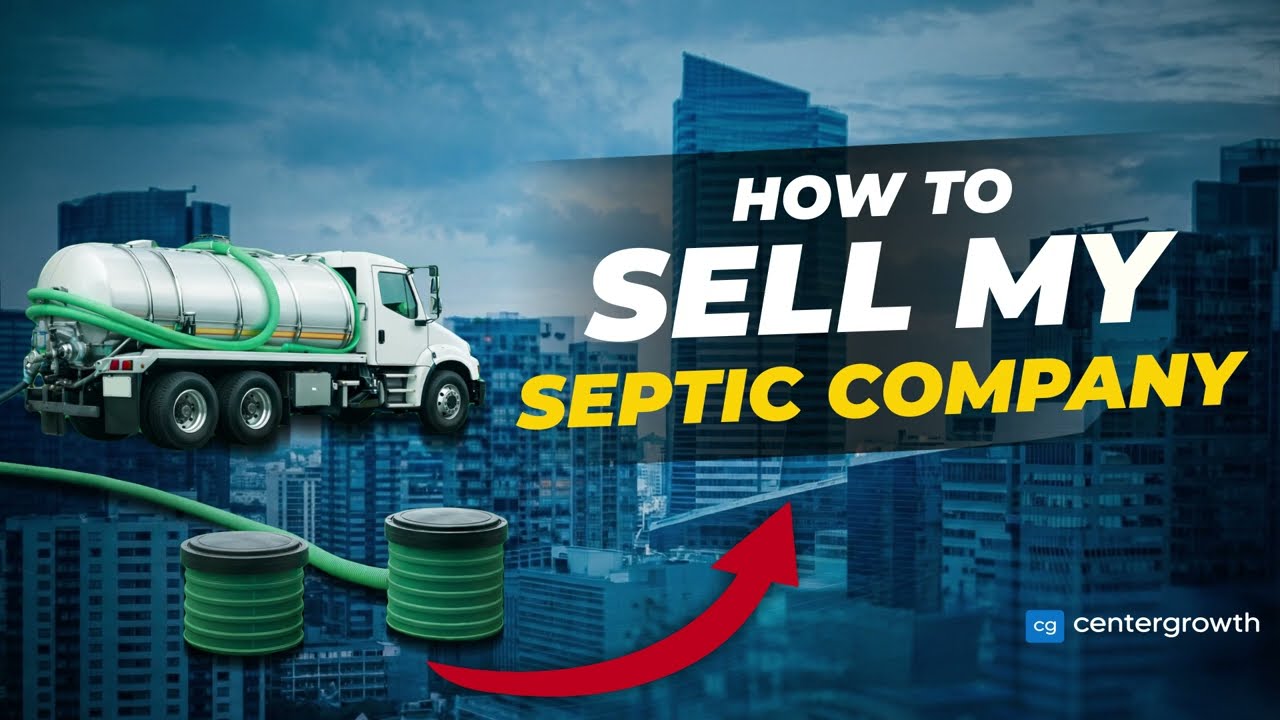
Sell My Septic Company Video
Three things set the price: route revenue, your trucks, and where you dump. Everything else is detail.
Septic is one of the quiet winners in the trades. Nobody dreams of owning a pumper truck, which is exactly why the businesses that do it well sell fast and sell strong. Demand never goes away, competitors are scarce, and the customer list renews itself every three to five years like clockwork. I put together a sell my septic company walkthrough for owners weighing an exit, and the notes below expand on the questions I hear most often across the closing table.
Valuing a Septic Pumping and Installation Business
Pumping routes are recurring revenue, and buyers know it
A tank needs pumping every few years whether the economy is up or down. That makes your customer database the single most valuable thing you own. Buyers will ask how many active customers you have, how many are on a reminder cycle, and what percentage come back. A company with 4,000 households in the database and a postcard or text reminder system is effectively an annuity, and it gets priced like one.
If your records live in a shoebox or in your head, fix that first. Moving your history into even basic routing software can add real dollars to the price, because it turns your memory into something a buyer can own.
The install and repair side of a septic company
Installs and repairs pay bigger tickets than pumping, but they behave differently in a valuation. New system installs track housing construction and can swing hard year to year. Repairs, drain field work, and inspections tied to home sales are steadier. Buyers like a blend: pumping as the base load, repair as the margin, installs as the upside. Show each line separately in your financials so the buyer can see the base is solid even if install revenue bounces around.
Side lines count too. Plenty of septic operators run grease trap service, portable toilets, or drain jetting off the same yard. Each line has its own margin profile and its own buyer appeal, so break them out rather than lumping everything under service revenue. A buyer might be chasing exactly one of those lines and pay extra for it.
Trucks, tanks, and what your iron is really worth
Pumper trucks are expensive, specialized, and hard to source, so fleet condition moves the price directly. A buyer will want year, mileage, tank capacity, and maintenance records for every truck, plus your excavator and trailer if you do installs. Two tired trucks with rusted tanks tell the buyer to budget 300 grand in capital spending, and that number comes straight out of your price. Keep the maintenance log current and get ahead of any DOT issues before diligence starts.
Disposal access can make or kill a deal
Here is the question inexperienced buyers forget and experienced buyers ask first: where do you dump, what does it cost, and is that access transferable? Some operators rely on a municipal treatment plant with rising fees, some haul long distances, and some hold land application permits that took years to secure. If you control a permitted disposal site, that may be the most defensible asset in the whole deal. Document the arrangement, the pricing history, and the transfer terms in writing before you list.
Buyers from outside the industry will not think to ask about this until their consultant does, and by then it can feel like a discovered problem instead of a disclosed fact. Disclose it up front, with numbers. Sellers who volunteer the hard details early control how those details get interpreted.
Licenses, health departments, and the paperwork handoff
Septic is regulated at the county and state level, and the licenses rarely transfer automatically. Installer certifications, pumper permits, and health department registrations may each have their own process and timeline. Map this early with your broker. In several deals I have worked, the license transfer set the closing date more than the financing did. A seller who has already talked to the health department and knows the steps looks organized, and organized sellers get better terms.
If a buyer needs to hold an installer certification personally, find out whether your lead field man qualifies or whether the buyer can operate under your license during a transition. That single answer often decides whether an out-of-industry buyer can even bid, and a bigger buyer pool is always in your favor.
Who buys these companies and how they pay
Your likely buyers are a neighboring operator wanting your routes, an individual leaving corporate life with an SBA loan, or increasingly a private equity backed platform rolling up liquid waste businesses. Each pays differently. Competitors pay fair prices with fast closings. SBA buyers pay full price but need clean tax returns. Platforms pay the most for size, but they want you to stay a year and they grind on the details. Expect some seller financing or an earnout in most structures, usually 10 to 20 percent, and treat it as normal rather than as an insult.
Before you talk to any of them, get your customer count, your fleet list, and your disposal paperwork onto three clean pages. That packet answers 80 percent of the first meeting. The sell my septic company video walks through the sequence in order, and it is worth watching twice: once now, and once the week before you sign a listing agreement. The owners who prepare like this rarely need to discount, because nothing in diligence surprises anyone.
FAQ About the Sell My Septic Company Video
Is the septic company video free to watch?
Yes. It is embedded at the top of this page and also available directly on YouTube, with no signup or payment involved.
How long is the How to Sell a Septic Company video?
About 4 minutes. It is built to be watched in one sitting, and each section of the video has a matching topic covered on this page.
What does the septic company video cover?
The video runs about 4 minutes and covers how buyers look at a septic company, the factors that move valuation up or down, and the preparation that protects your price. The guide above walks the same ground in more depth.
More video guides by industry
This page is part of our Business Broker Video Directory, where video walkthroughs on selling other types of businesses are organized by industry. If you own a different kind of company, start there to find the guide that matches your niche.